Custom Rugs: The Complete Guide to Shapes, Sizes, Materials, and How to Order One
With insight from Leila Caramad, Lead Designer at Nourison
A custom rug is any rug made to a size, shape, material, or color specification that doesn’t exist on a shelf: a nine-foot round for a bay window, a runner cut to fit a curved staircase, a rug matched to a client’s exact paint chip. If a standard size doesn’t fit your space or your vision, a custom rug is the answer.
Most rug shopping starts with a tape measure and a size chart, until a dining room measures eleven and a half feet wide, or an entryway is round, or the construction is perfect but the color is wrong. This guide walks through what “custom” actually means in the rug world, when it’s worth pursuing, and what the process looks like from first sketch to finished floor.
What Does a Custom Rug Actually Mean?
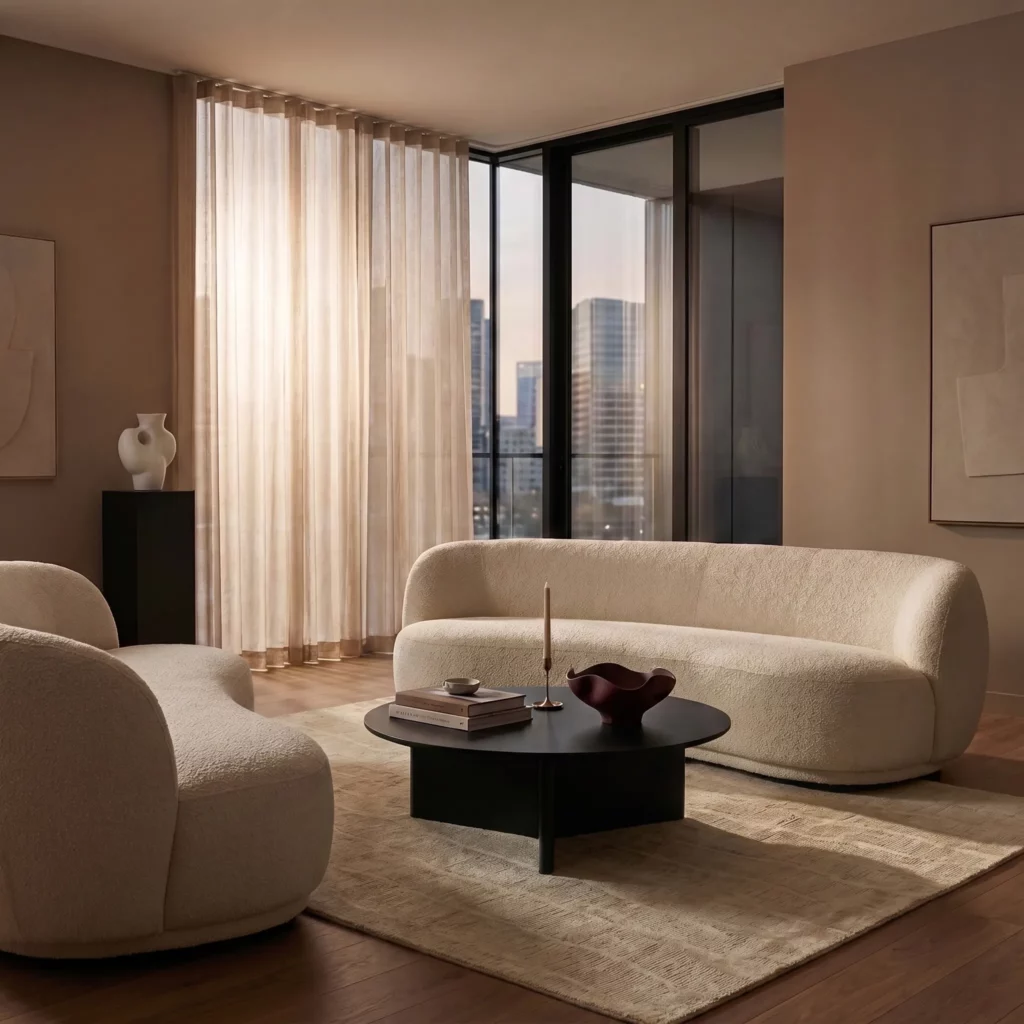
A custom rug is built to specifications that don’t exist in a standard catalog: a nonstandard size, an unusual shape, a specific fiber blend, a particular pile height, or a colorway created for a single project. It’s different from a “made to order” rug, which is simply a standard design produced after purchase rather than pulled from existing stock.
In practice, most custom requests trace back to a short list of motivations. Leila breaks it down:
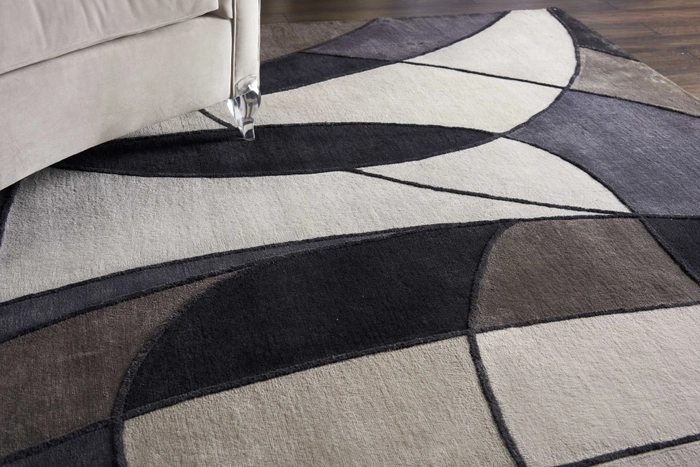
“Most of the time it comes down to one of three things: specific colors they have in mind, wanting the rug’s pattern to show around how they’ve arranged their furniture instead of disappearing under it, or a room that’s an odd size and needs an exact fit. Often it’s a combination of all three.”
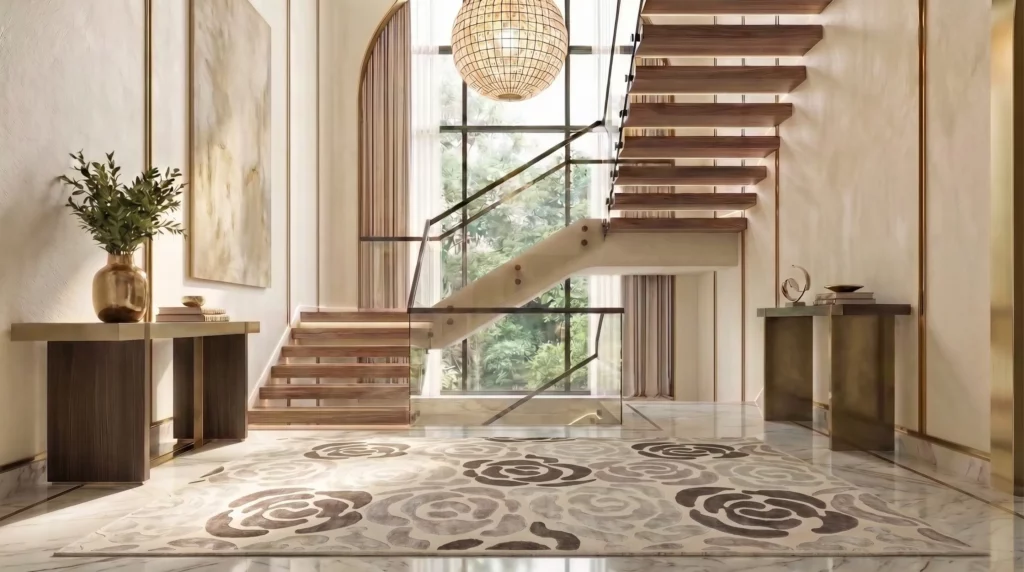
True customization touches one or more of four variables: dimension, shape, material, and color, not just a size picked from a dropdown menu. At Nourison, that means the rug is built around your specification, not adapted from one; every custom order starts with a conversation about the space, not a size chart.
When Do You Need a Custom Rug Instead of a Standard Size?
You need a custom rug when your room, your design intent, or your material requirements fall outside what a standard size or construction can deliver, most often nonstandard room dimensions, a design vision built around a color or pattern that doesn’t exist off the shelf, or a construction requirement, like a particular pile height or fiber, that standard runs don’t offer.
“Rooms with an unusual shape, extra columns or architectural details, or simply too large for standard sizes. Those are the cases where a custom rug isn’t a preference, it’s a necessity.”
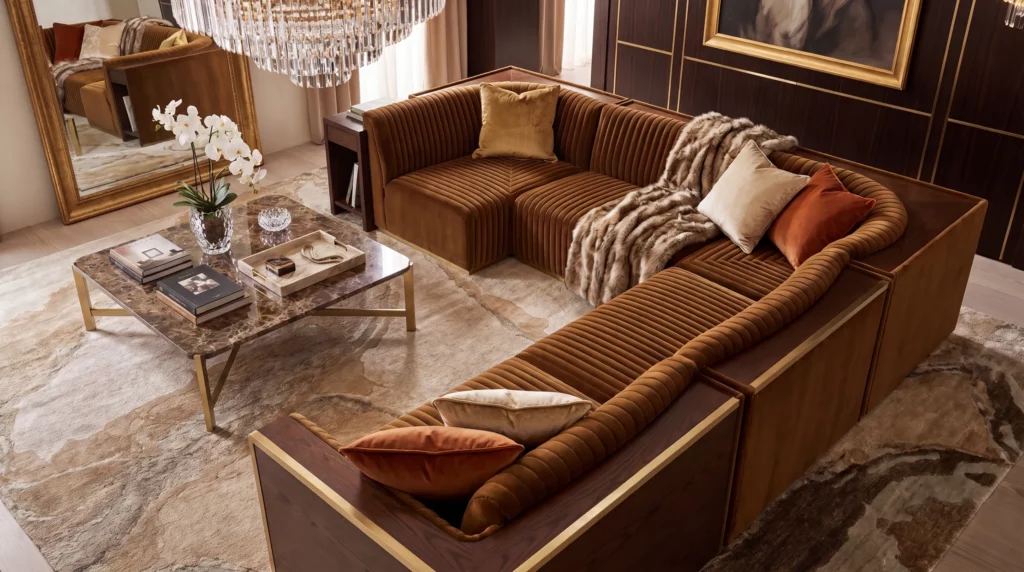
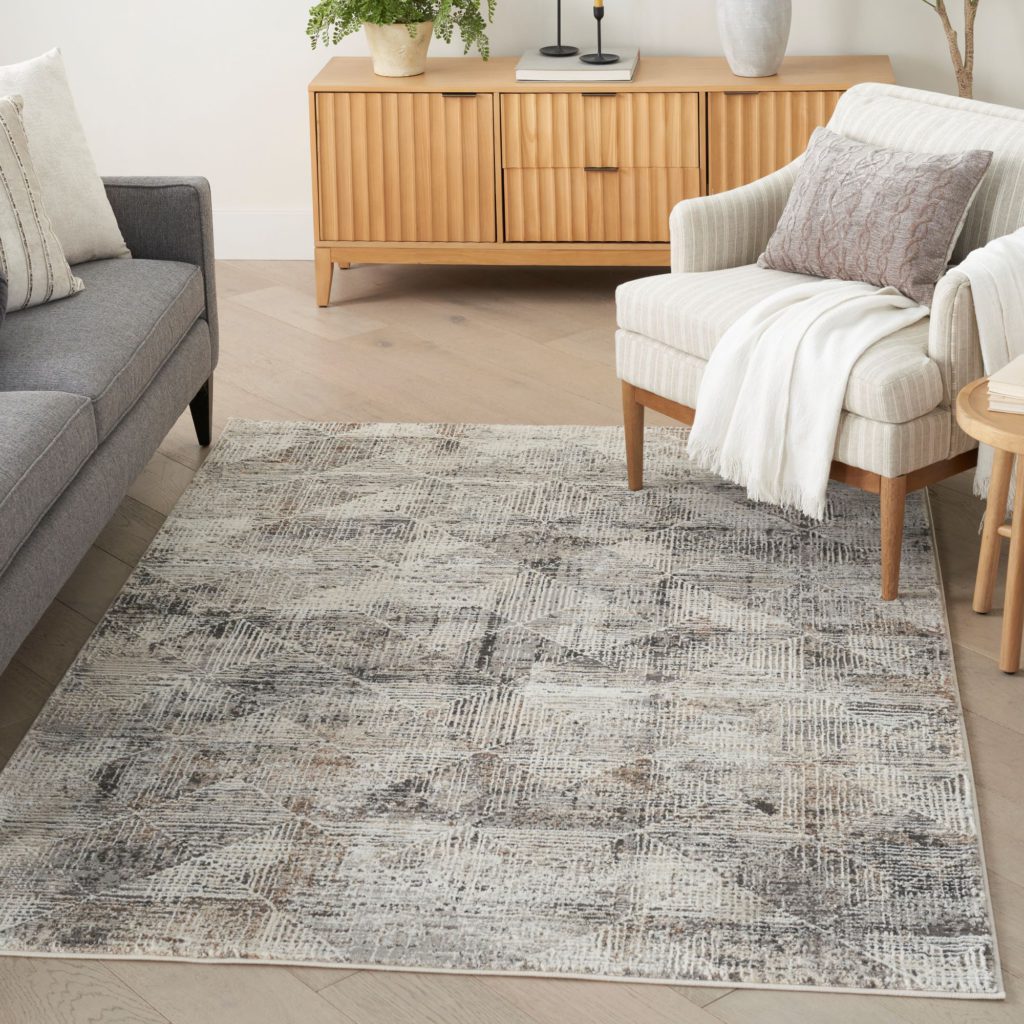
A few concrete examples: a living room measuring thirteen by sixteen feet doesn’t fit neatly under an eight-by-ten or nine-by-twelve; a round breakfast nook needs a round rug, and round rugs are rarely stocked past eight feet in diameter; an interior designer working from a client’s existing palette often needs a rug dyed to match a specific fabric swatch, not the closest available shade.
Cost is the other side of the decision. Custom rugs typically run higher per square foot due to the smaller production run and specification work involved, so if an eight-by-ten in your preferred material already fits your room, there’s rarely a reason to go custom. Custom makes sense when the fit, finish, or look genuinely can’t be achieved any other way.
What Shapes Can a Custom Rug Be?
Custom rugs can be made in nearly any shape a room requires, including round, oval, square, runner, and irregular or angular shapes cut to match a specific floor plan. Round and oval are the most common requests beyond rectangular, typically for breakfast nooks, entryways, and rooms built around a circular table.
Runners deserve their own mention because they’re the shape most often customized by length. A standard runner might come in two-and-a-half by eight or ten feet, but hallways rarely measure in even numbers, and a custom runner can be cut to whatever length the corridor demands, pattern centered and ends finished cleanly rather than cropped.
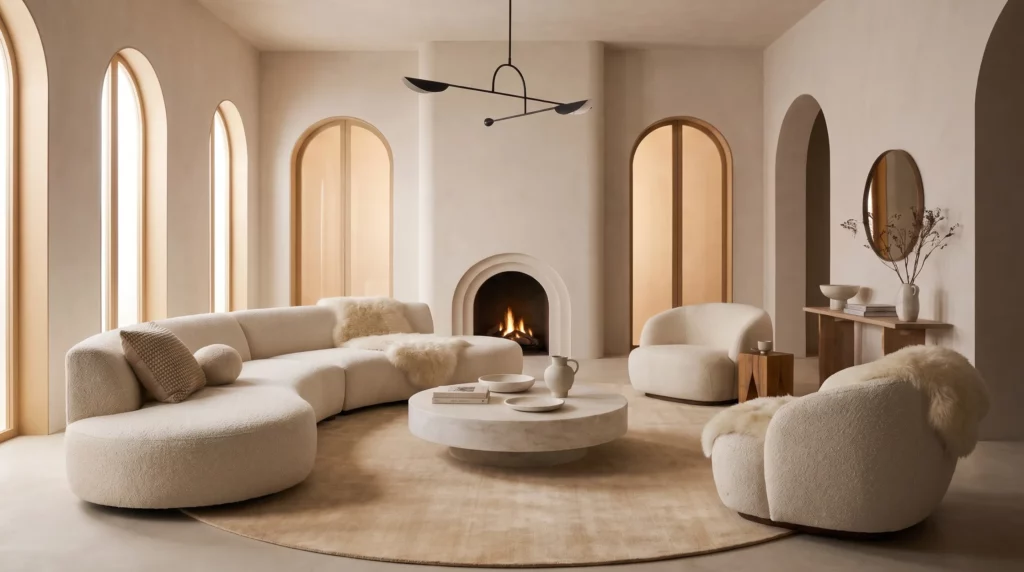
Irregular shapes are the most technically demanding category: rugs cut around a fireplace hearth, fitted to a bay window’s curve, or shaped to follow an octagonal sunroom. This requires a template of the actual floor, a paper or cardboard cutout the client provides, or a professional on-site measurement, before construction begins.
Leila describes one of the more demanding projects she’s worked on: “One of the most memorable was an eight-sided dining room rug set on a raised platform and surrounded by columns. The designer spent three hours measuring every side and angle, taping her business card to each corner to mark it for our templating team. She also wanted one section of the pattern enlarged to define the border more clearly.”
What Materials Can Be Customized?
Nearly every element of a rug’s construction can be customized, including fiber, pile height, weave structure, and backing. Fiber choice and construction method are linked, not independent decisions, which surprises a lot of first-time custom buyers.
“We only build wool and silk rugs hand-knotted. If a client wants bamboo silk or a shinier nylon look, that’s hand-tufted construction instead.”
Fiber choice affects both feel and performance. New Zealand wool is prized for its resilience, natural stain resistance, and how well it holds dye, which matters when a color needs to match a swatch exactly. Silk contributes sheen and takes light differently than wool, which is why the two are often specified together; cotton is common in the foundation and backing rather than the pile itself, providing structure without bulk. If you want the full picture on how wool performs over time, we broke it down in everything you need to know about wool rugs.
Pile height changes both look and maintenance: a low pile, generally under a half inch, reads more tailored and resists crushing in high-traffic rooms, while a plush, high pile offers a softer feel but shows footprints and vacuum lines more readily.
Construction quality shows up most clearly in knot density for hand-knotted rugs, measured in knots per square inch. Higher counts produce finer detail and a denser, more durable pile, part of why hand-knotted custom rugs command a premium over hand-tufted alternatives.
How Long Does a Custom Rug Take?
A custom-sized rug cut and bound from existing broadloom ships in two weeks or less. A custom rug from Nourison’s Reserve Custom Studio starts with a corner sample for the customer’s review and approval, which takes about three to four weeks, then four to five months for the finished rug. Those are two separate milestones, and knowing the difference is what keeps a project on schedule.
“Our factory keeps Nourison pom boxes on hand, which saves a lot of time. As soon as a client selects their poms, we send the numbers straight to the factory to match. From there it typically takes three to four weeks to get a corner sample back, and four to five months for the full-size rug.”
The corner sample is the checkpoint: a small woven section showing the actual color, pile, and construction, produced before the full rug goes on the loom. Approving it releases the order into full production, so any hesitation at that stage pushes the finish date out accordingly.
Which Custom Path Do You Need?
Nourison offers two routes, and they suit very different projects.
Custom Size takes an existing Nourison broadloom style and cuts it to your specification. You pick the shape, enter your dimensions in whole numbers up to the width of the broadloom roll, choose a binding finish, and add a rug pad if you want one. It ships in two weeks or less. This is the right path when the pattern and construction you want already exist and what you actually need is a fit no standard size delivers.
Reserve Custom Studio builds a handmade rug from the ground up. You select a design from our pattern library, choose your yarn colors, and specify the size. A computer rendering comes back within two weeks, an 18-inch by 18-inch strike-off costs $75 and takes three to four weeks, and the finished rug ships four to five months from the date of deposit for sizes up to 10 by 14 feet. This is the path when color, design, and construction all need to be specified rather than selected.
What Is the Ordering Process Like?
Ordering a custom rug generally follows five stages: initial consultation, material and color selection, specification and quoting, production, and delivery. The consultation establishes room dimensions, design intent, and budget; material and color selection is where fiber, construction, pile height, and colorway get finalized, often against physical samples rather than screen images; specification locks in the final size, shape, and pattern before a quote is issued and production begins.
The most common way a custom project goes sideways isn’t a measurement error. Leila puts it plainly: “The biggest mistake is trying to reinvent the wheel. If there’s an existing quality or design that’s already close to what the client wants, it’s better to start there and make minimal changes to color, size, or shape, rather than trying to convert one quality into an entirely different one from scratch.”
Starting from an existing quality shortens the timeline, reduces cost, and lowers the risk of an unwelcome surprise at the corner sample stage.
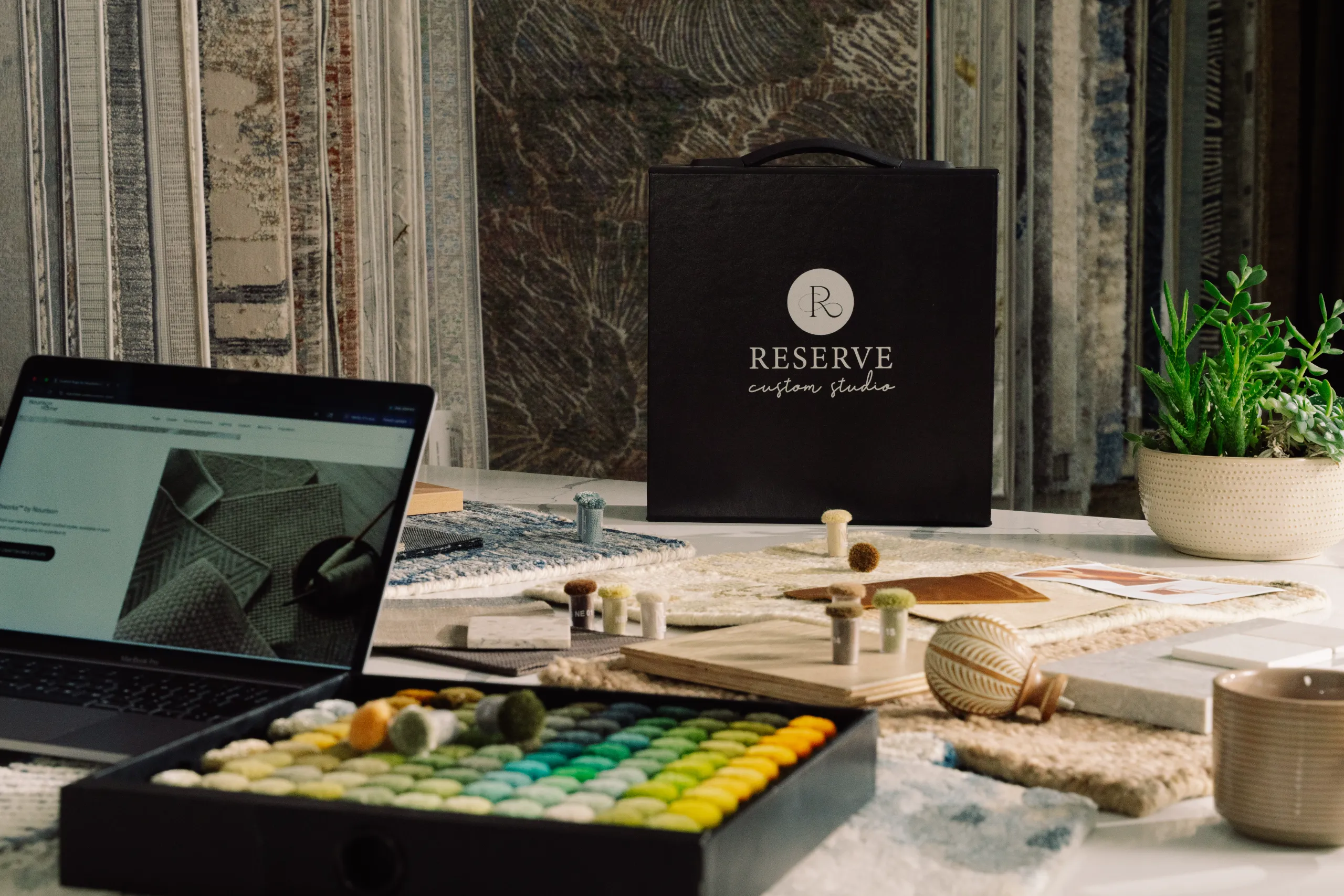
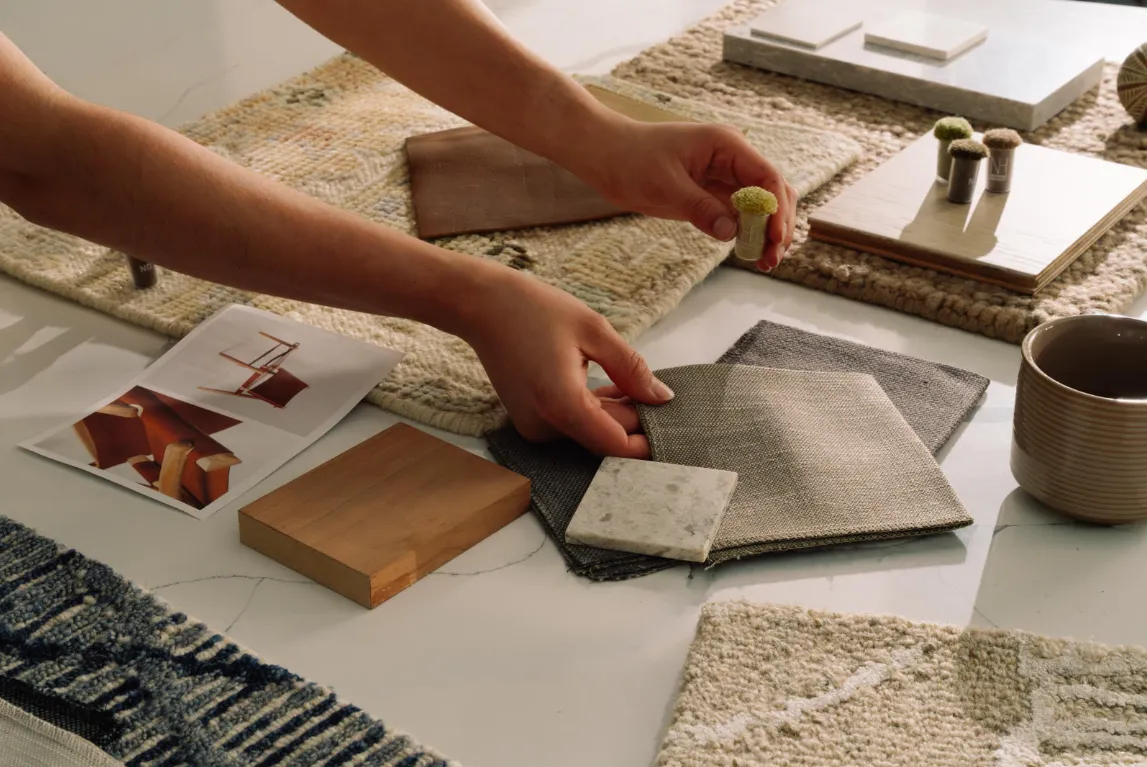
The material and color selection step is where the process most often stalls for buyers working from photos or paint chips alone, since screen color and lighting vary too much to trust for a final decision on a piece that may cost thousands of dollars and take months to produce. This is exactly the gap Nourison built the Reserve Custom Studio Kit to close: a portable studio case containing more than 500 color poms and a full yarn library in real wool and silk, alongside fifteen or more construction samples spanning hand-tufted and hand-knotted qualities.
“It makes the designer’s job much easier because the poms and samples are portable. They can bring them into a client’s home and hold them up against elements that can’t be moved, like the wallpaper, flooring, or wall art. They can also see how the color actually reads in that room’s natural light.”
Because the color numbers are standardized between the studio and the mill, a client’s palette selection can be sent as a reference number rather than shipped and waited on, saving a step that would otherwise add weeks.
Several factors extend the timeline further: large sizes, intricate patterns with many color changes, and irregular shapes requiring custom templates. Anyone planning a renovation, a new build, or a client installation with a hard deadline should factor in lead time from the first design conversation, not after the floor plan is finalized.
The Reserve Custom Studio Pom Box
Our kit is built to support designers through every stage of the custom rug process, combining premium craftsmanship with personalized partnership. From hand-knotted and hand-tufted New Zealand wool and silk rugs to fully customized size, shape, color, and construction, we work alongside you to ensure every rug is crafted precisely to your design intent.
How Do Stair Runners Work as Custom Pieces?
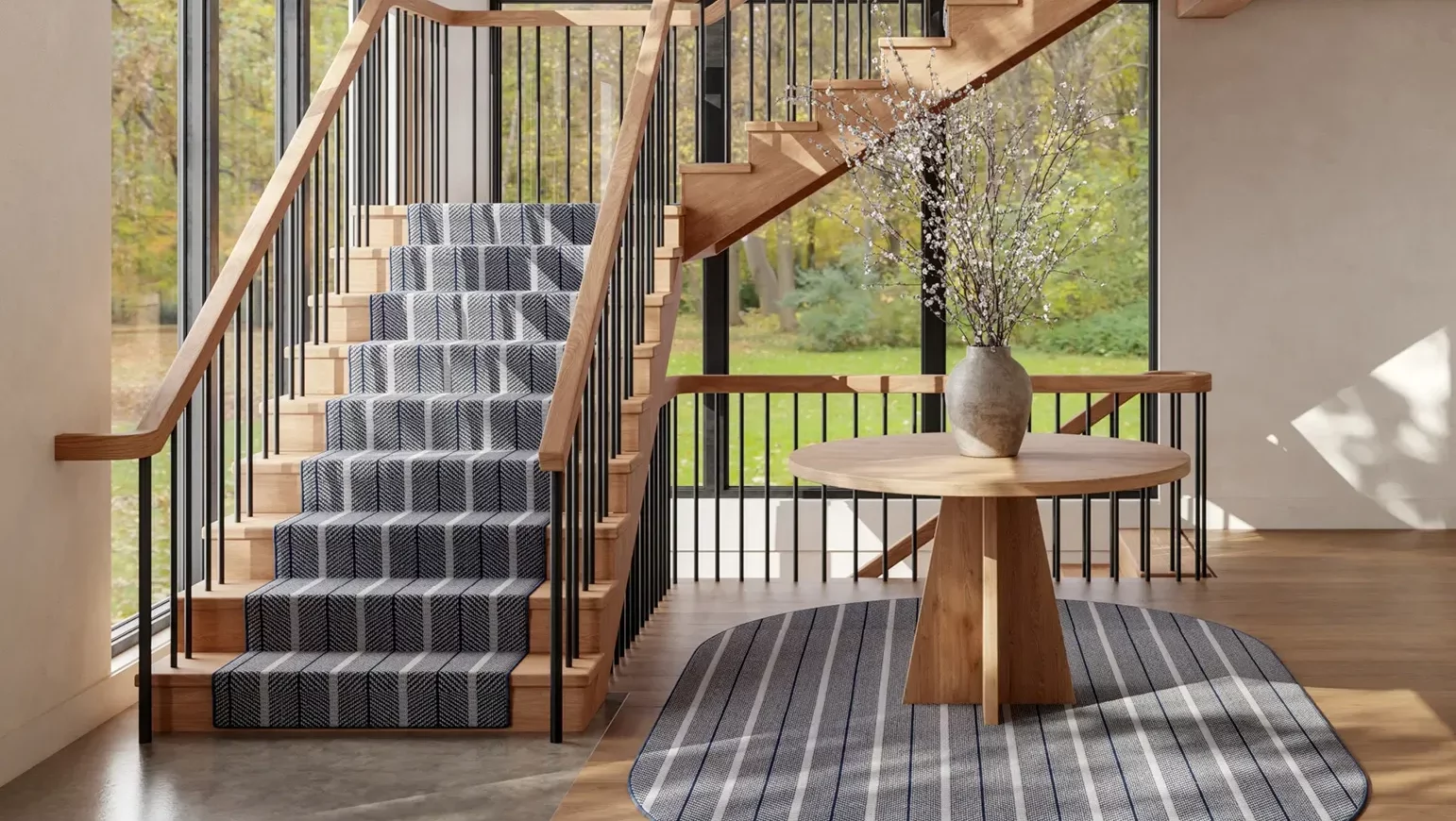
Stair runners are almost always custom pieces because staircases rarely conform to a standard width, and most involve curves, landings, or winders that a pre-cut runner can’t accommodate. A custom stair runner is measured tread by tread, accounting for the depth of each step, the height of the riser, and any turns, so the pattern lays flat and centered on every stair.
Measurement here carries more consequence than in any other custom category: “The key is having an expert installer measure everything correctly from the start. If the measurements are off, there’s not much that can be done to correct it afterward,” the designer explains. A rectangular rug that comes in slightly large can sometimes be bound down or repositioned; a stair runner cannot. It’s cut and finished to one specific staircase, which is why the installer’s measurements, not the client’s, should be the ones that go to the mill.
Width is the first custom decision. Standard stair runner widths often run twenty-seven to thirty-six inches, but the correct width depends on the staircase’s total width and how much bare wood or stone the homeowner wants exposed; three to four inches per side is a common starting point. Curved and winding staircases require the most precision, since each curved tread has a slightly different shape than the one before it, making a runner for a curved staircase essentially custom-fit tread by tread.
Explore Custom Size Rugs
Choosing from our broadloom options, Nourison can craft rugs in virtually any size, up to the width of your selected broadloom roll. After selecting a binding option for a unique and lasting finish, your custom-sized rug can be shipped to your location in two weeks or less.
How Do Interior Designers Use Custom Rugs for Client Projects?
Interior designers use custom rugs to solve problems standard sizing can’t, most often color-matching to an existing palette, fitting irregular or oversized rooms, and creating a cohesive look across multiple rooms or a full home.
Working with a designer rather than a homeowner changes the process in one specific way: “It comes down to their grasp of the overall design concept. Interior designers typically have a stronger understanding of the whole space, which lets them build a more cohesive result around the rug,” says Leila.
Color matching is the most frequent use case. A designer working with upholstery fabric, drapery, or a client’s existing art collection often needs a rug dyed to match a specific reference. Multi-room projects benefit differently: a designer might specify the same colorway and construction across a living room, hallway runner, and primary bedroom, creating continuity that’s difficult to achieve when pulling from separate standard collections.
How to Choose the Right Custom Rug for Your Project
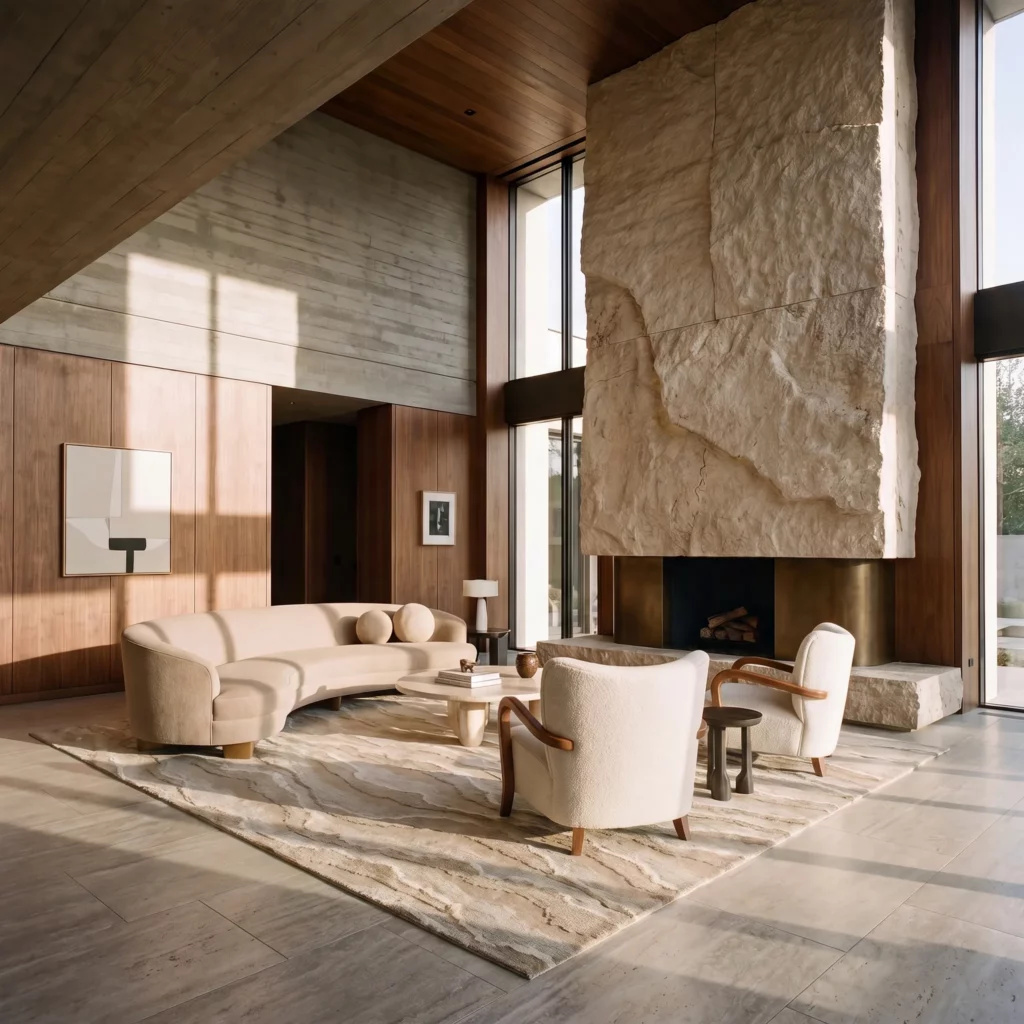
Leila’s advice for anyone starting their first custom project reorders the whole process: “If you’re starting from scratch, start with the rug. Think of it as the island everything else in the room lands on. Choose it first, then build your furniture and color choices around it, and the whole room comes together cohesively.”
With that in mind, a short checklist:
- Start with the rug, not the sofa. It’s the largest field of color in most rooms, and it’s the easiest thing to build a palette around rather than match to.
- Start from an existing quality where you can. Adjusting color, size, or shape on a construction that already works is faster, cheaper, and lower risk than building a new quality from scratch.
- Measure the actual space, including curves, columns, alcoves, and any raised platforms, before choosing a shape. For irregular rooms, expect a real template, not a sketch.
- Get your hands on real samples. Screen color is never reliable enough for a final decision on a piece this size and cost, and natural light changes how a color reads.
- Plan for three to four weeks to a corner sample and four to five months to the finished rug. Complex shapes and heavy color-matching run longer.
- Let your fiber choice inform construction. Wool and silk are hand-knotted; bamboo silk and nylon are hand-tufted.
- For stairs, use an expert installer’s measurements. Errors at that stage generally can’t be corrected after the fact.
Frequently Asked Questions
Q: What is the difference between a custom-sized rug and a Reserve Custom Studio rug? A: A custom-sized rug is cut and bound to your dimensions from an existing Nourison broadloom style, with your choice of shape, size, and binding finish, and it ships in two weeks or less. A Reserve Custom Studio rug is a handmade piece built from scratch, where you select the design from our pattern library, choose your yarn colors, and specify the size, then wait four to five months from deposit for rugs up to 10 by 14 feet. Choose custom-sized when the style you want already exists and you need an exact fit quickly. Choose Reserve Custom Studio when the color, design, and construction all need to be specified from zero.
Q: Can I get a rug made to fit my room? A: Yes. Custom rugs are built to your room’s exact dimensions, including nonstandard widths, curves, columns, and irregular shapes. A professional measurement or a physical template of the space is typically required before production begins, and for genuinely irregular rooms that on-site measuring can take several hours.
Q: What is the process for ordering a custom rug? A: The process generally moves through five stages: consultation, material and color selection, specification and quoting, production, and delivery. After color selection, a corner sample is woven and sent for approval before the full rug goes into production, so that approval step is the checkpoint that governs the final delivery date.
Q: How much does a custom rug cost? A: Custom rug pricing depends on size, fiber, construction method, and complexity, and it typically runs higher per square foot than standard sizes due to the smaller production run and specification work involved. Hand-knotted wool and silk constructions generally cost more than hand-tufted bamboo silk or nylon, given the labor and knot density involved.
Q: How long does a custom rug take to make? A: Expect about three to four weeks to receive a corner sample for approval, then four to five months for the full-size rug. Large sizes, intricate multi-color patterns, and irregular shapes requiring a custom template add time on top of that.
Q: Who makes the best custom rugs? A: The best custom rug makers offer true specification across size, shape, material, and color, backed by physical sample access rather than digital approximations alone. Look for a process that includes hands-on color and construction review in the actual room before production, plus a corner sample approval step, not just a size and color dropdown. Ready to start your own custom project? The Reserve Custom Studio Kit puts more than 500 real yarn colors and fifteen or more construction samples in your hands, so you can hold your palette against the actual wallpaper, in the actual light, before a single knot is tied.