Buy It for Life Rugs: Which Durable Area Rugs Are Actually Worth It?
The most durable area rugs are chosen for their construction, fiber, and the room they will live in. A well-made hand-knotted wool rug can serve a household for decades, sometimes passing to another generation, but longevity depends on how it is used and cared for. A higher price alone is no guarantee.
A rug takes a surprising amount of daily punishment. Chair legs drag across it, sunlight moves over it, and grit works its way between the fibers. Before paying extra for a rug you hope to keep for life, it helps to know which details deserve your attention and which promises to question.
- Can a rug really last a lifetime?
- What makes a rug buy it for life: construction, fiber, and origin?
- Which rug constructions tend to last longest?
- How can you tell whether wool is good quality?
- Five Nourison collections worth examining for long-term use
- How do you care for a rug so it lasts decades?
- Where should a buy-it-for-life rug go, and where should it not?
- Is a long-lasting rug worth it? New versus secondhand and cost per year
- Frequently asked questions
Can a rug really last a lifetime?
Yes, some rugs can last a lifetime, especially repairable hand-knotted wool rugs in appropriate conditions. The honest answer to “how long do rugs last?” is that there is no universal expiration date. Fiber quality, foundation, knotting, foot traffic, sunlight, moisture, and maintenance all affect the outcome.
A rug may remain structurally sound long after its pile begins to look worn. That distinction matters. Professional cleaning, edge repair, and fringe restoration can extend the usable life of a well-constructed rug; they cannot always reverse severe fiber loss or damage to a glued backing. An heirloom rug earns that description through years of use, not through an antique-looking print.
What makes a rug buy it for life: construction, fiber, and origin?
Start by turning over the rug. On a hand-knotted piece, the pattern is formed by yarns tied around foundation threads, often visible on the reverse. The pile is integral to the structure. With many hand-tufted rugs, yarn is punched into a fabric foundation and held by adhesive and a secondary backing. That construction can be appealing and comfortable, but its repair options differ.
Next, consider fiber. Wool has natural resilience and can recover from ordinary compression, which is one reason it has such a long history in rug making. Silk brings sheen and fine detail but generally calls for gentler placement. Cotton is often used in a rug’s foundation; jute can be attractive but needs protection from prolonged moisture. Performance fibers can be practical in spill-prone rooms without necessarily being the strongest candidate for an heirloom purchase.
Country of manufacture is useful traceability information, not a quality score. Ask where the rug was made, what wool it contains, how it was processed, and what construction technique was used. Judge the answers together, rather than assuming one country or fiber label settles the question.
Which rug constructions tend to last longest?
For a rug intended to be repaired and kept for decades, hand-knotted wool is usually the strongest starting point. Handwoven wool flatweaves are another compelling option because they do not rely on a tufted pile or adhesive backing. Hand-tufted and power-loomed rugs can provide years of service, but durability varies widely by materials, density, finishing, and use.
A practical comparison is more useful than a promised lifespan:
- Hand-knotted wool: potentially several decades or longer with suitable use and professional repair; inspect the foundation, edges, and pile.
- Handwoven wool flatweave: often long-lived and relatively easy to reposition, though exposed edges and yarn wear still need attention.
- Hand-tufted: lifespan depends partly on adhesive and backing condition; deterioration may be difficult to restore economically.
- Power-loomed: ranges from economical short-term options to durable everyday rugs; construction alone does not establish a fixed lifespan.
Knot density can indicate how finely a design is executed, but a higher knots-per-square-inch figure does not automatically mean greater durability. Wool strength, knot consistency, foundation quality, and finishing matter too. A thick rug is not necessarily stronger than a thinner, closely constructed one. For a closer look at surface height, read our guide to high- and low-pile rugs and advice on choosing pile by room.
How can you tell whether wool is good quality?
Good wool is judged by fiber strength, consistency, appropriate processing, and the way it behaves in the finished rug. The words “pure wool” tell you the fiber content, but not its staple length, twist, dyeing method, or finishing. Ask for a fiber specification and construction details, and inspect a sample if possible.
New Zealand wool and European wool are meaningful sourcing descriptions when documented, but neither label makes every rug identical. A wool blend can also be excellent when its components and purpose are clear. Third-party certifications, when applicable to the exact product, can substantiate specific testing or sourcing claims. They should never be assumed from the collection name.
Why does a wool rug shed?
Wool rug shedding is often the release of loose fibers left from spinning, cutting, and finishing. Some shedding is normal, especially early in a rug’s life, and it may lessen with routine gentle vacuuming. There is no reliable deadline at which every wool rug stops shedding. Persistent heavy fiber loss, exposed foundation, or unusual bald spots deserve an inspection rather than reassurance.
For a closer look at wool properties and care, read Everything About Wool Rugs or explore how different fibers compare in Rug Materials 101.
Five Nourison collections worth examining for long-term use
Nourison was founded in New York City in 1980 by brothers Paul, Alex, and Stephen Peykar. Hand-knotted carpets were part of the business from the beginning. That history matters most when paired with the specifications of the individual rug, because construction and care determine how a particular purchase will age.
The five designs below show different approaches to lasting quality. The specifications refer to the pictured styles, not necessarily every style in a broader collection.
Tahoe: traditional pattern in hand-spun wool
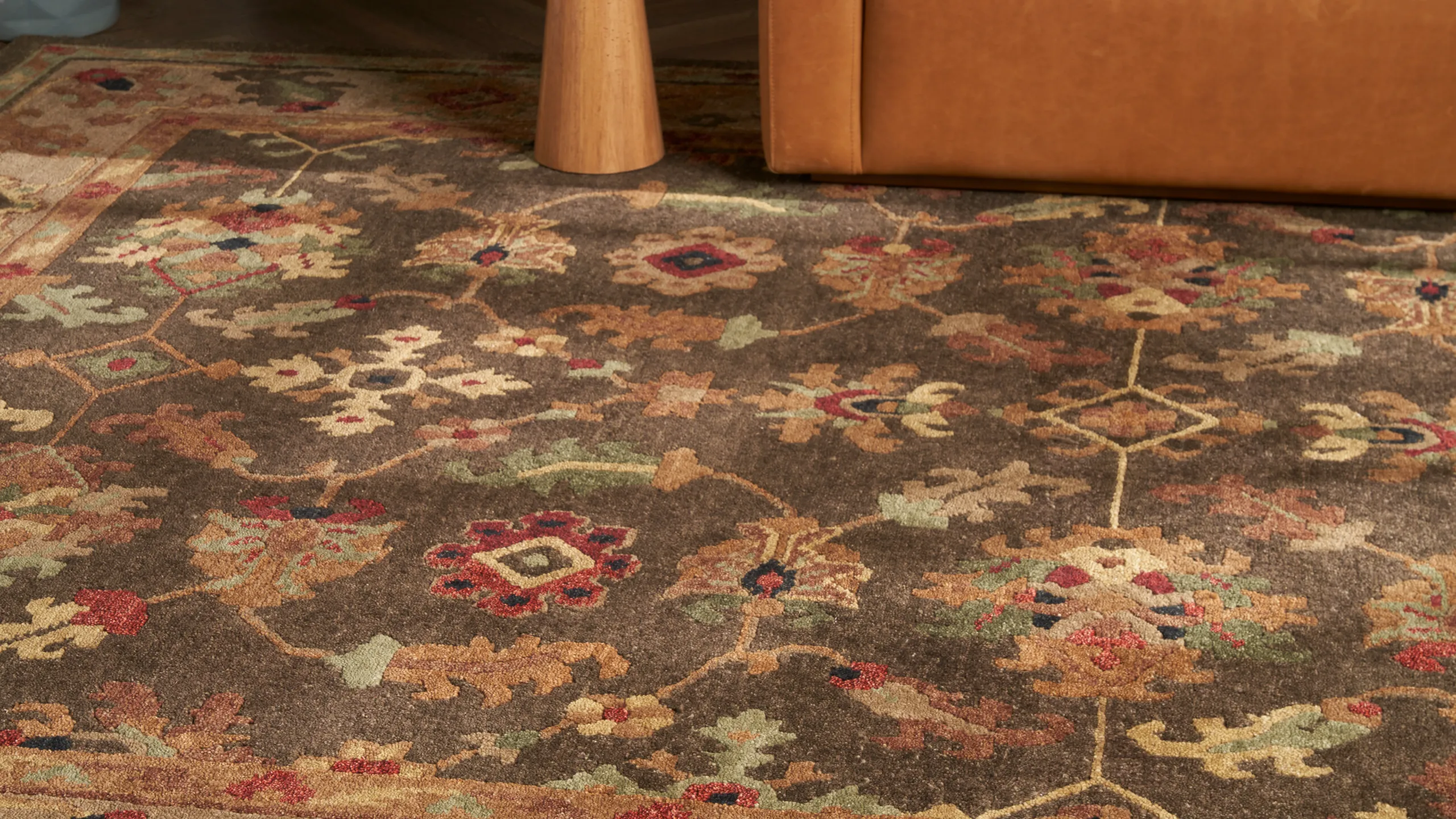
The Tahoe Collection is hand-knotted in India from 100% wool, with a 0.5-inch medium cut pile. Its rich espresso ground, traditional floral motifs, and rust-red accents help conceal the appearance of everyday wear. We recommend this collection for high-traffic areas, where its wool construction offers lasting resilience with proper care.
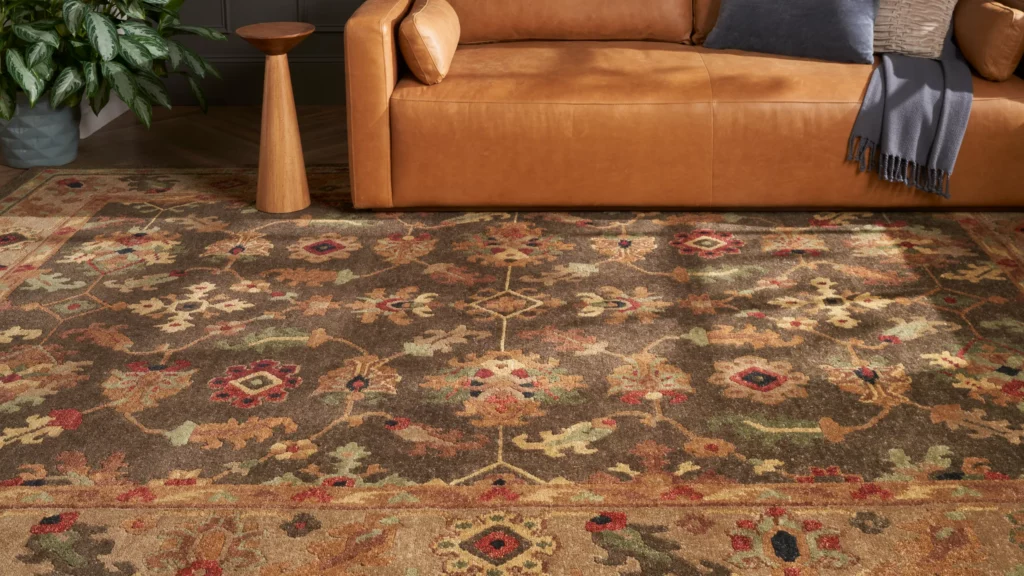
| Construction | Hand-knotted |
| Fiber | 100% wool; collection describes hand-spun wool |
| Origin | India |
| Pile height | 0.5 inch |
| Care | Vacuum without beater bar; spot clean promptly; professional cleaning recommended |
| Rooms | Living room; selected higher-traffic indoor spaces subject to layout and maintenance |
Alessia: wool with a carved geometric surface
The Alessia Collection is hand-knotted in India from 100% European wool, with a 0.5-inch medium cut pile and no backing. Its carved geometric lines create subtle variations in texture across the surface. We recommend this collection for moderate-traffic areas, particularly living rooms and bedrooms where its natural wool texture can be enjoyed for years to come.
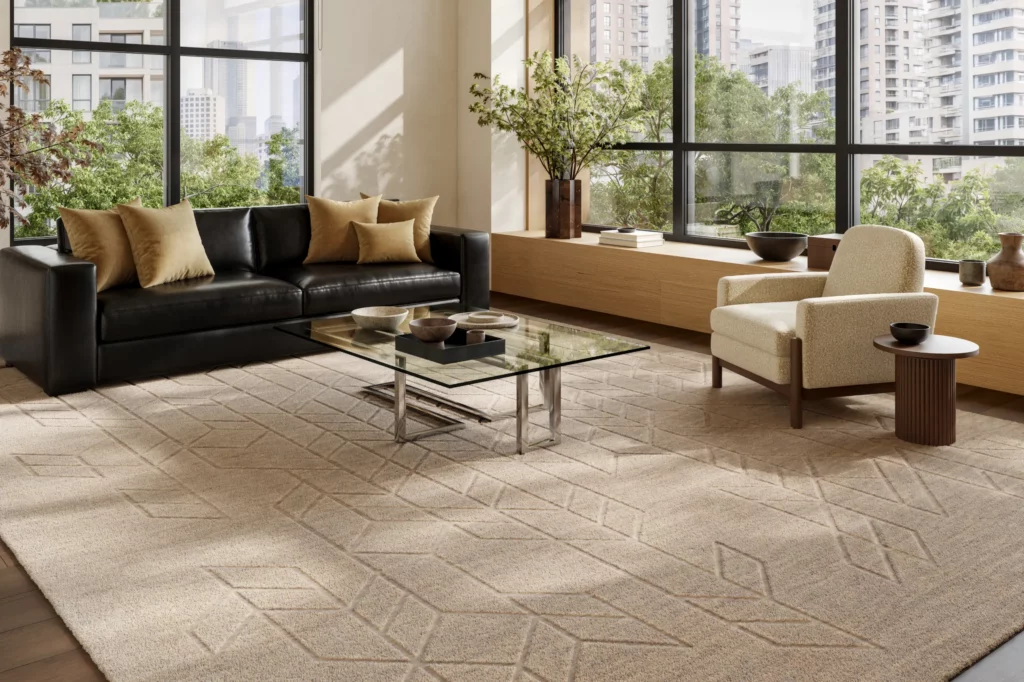
| Construction | Hand-knotted |
| Fiber | 100% European wool |
| Origin | India |
| Pile height | 0.5 inch |
| Care | Vacuum without beater bar; prompt damp-cloth spot cleaning; professional cleaning recommended |
| Rooms | Living room, bedroom, or home office; moderate foot traffic |
Christopher Guy Wool & Silk: fine detail with careful placement
The Christopher Guy Wool & Silk Collection reflects our collaboration with Christopher Guy Harrison, the British designer known for his sculptural furniture and distinctive approach to luxury interiors. His appreciation for graceful forms and artistic detail carries through to the collection’s abstract patterns and subtle shifts in texture. Hand-knotted in India from New Zealand wool and silk, these rugs feature a Tibetan weave construction that brings intricate designs to life through variations in color and sheen. The featured design has a 0.5-inch cut pile, with wool providing resilience and silk lending a soft luster. We recommend placing these rugs in living rooms or studies where their fine materials can be appreciated and protected from frequent spills and excessive wear. With proper care, their hand-knotted construction supports years of use.
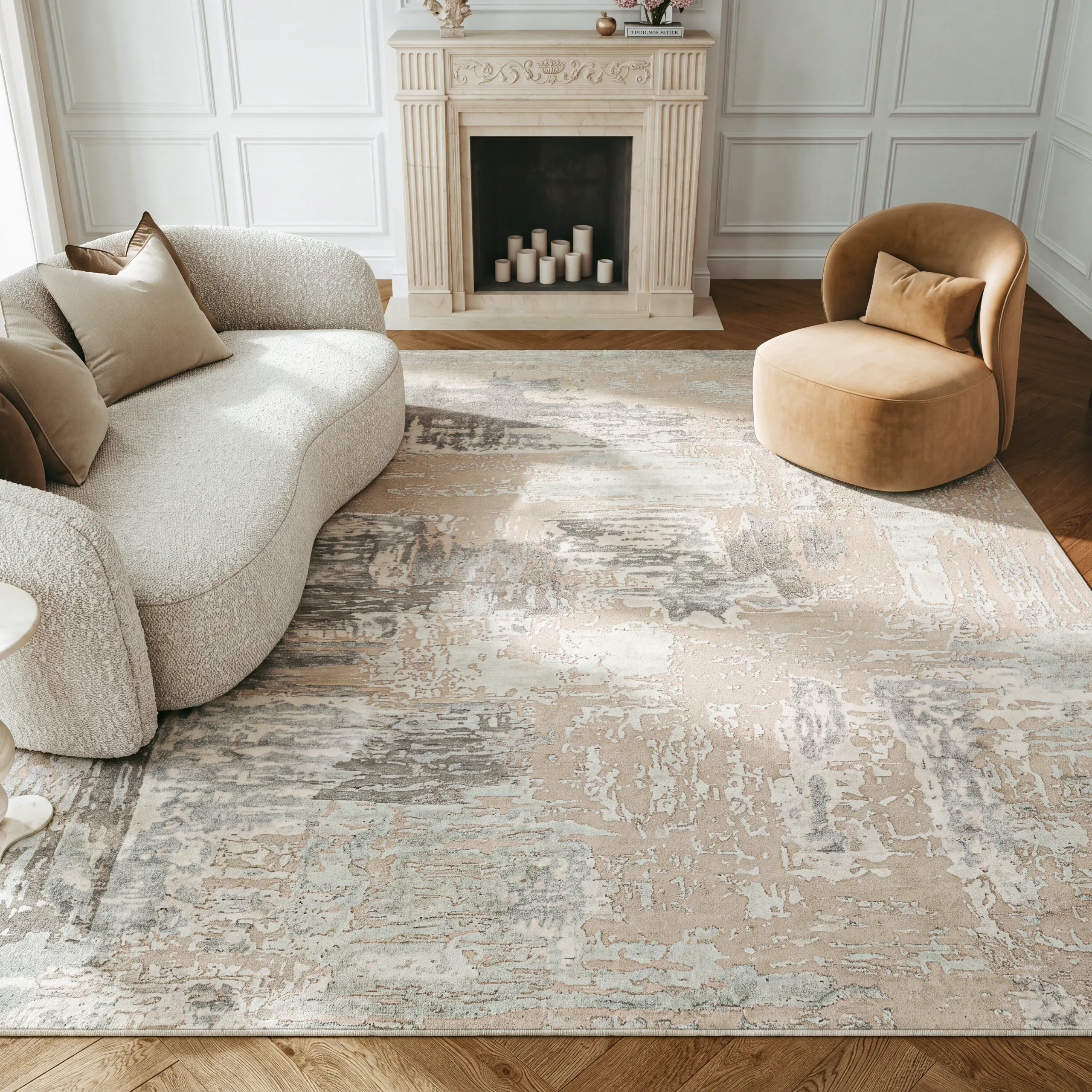
| Construction | Hand-knotted; Tibetan weave |
| Fiber | New Zealand wool and silk |
| Origin | India |
| Pile height | 0.5 inch |
| Care | Vacuum without beater bar; spot clean promptly; professional cleaning recommended |
| Rooms | Living room or study; protect silk details from spills and abrasive wear |
Heritage Vine: a vintage character, without the guesswork of vintage condition
The Heritage Vine Collection is hand-knotted in India from a wool-rich blend, with a 0.50-inch high-low pile. Its Persian-inspired floral patterns, short fringe, and vegetable-dyed finish give each rug the character of a treasured vintage textile. For those drawn to the look of an heirloom rug, the collection offers traditional craftsmanship with the advantage of a new rug whose materials and construction are known from the start.
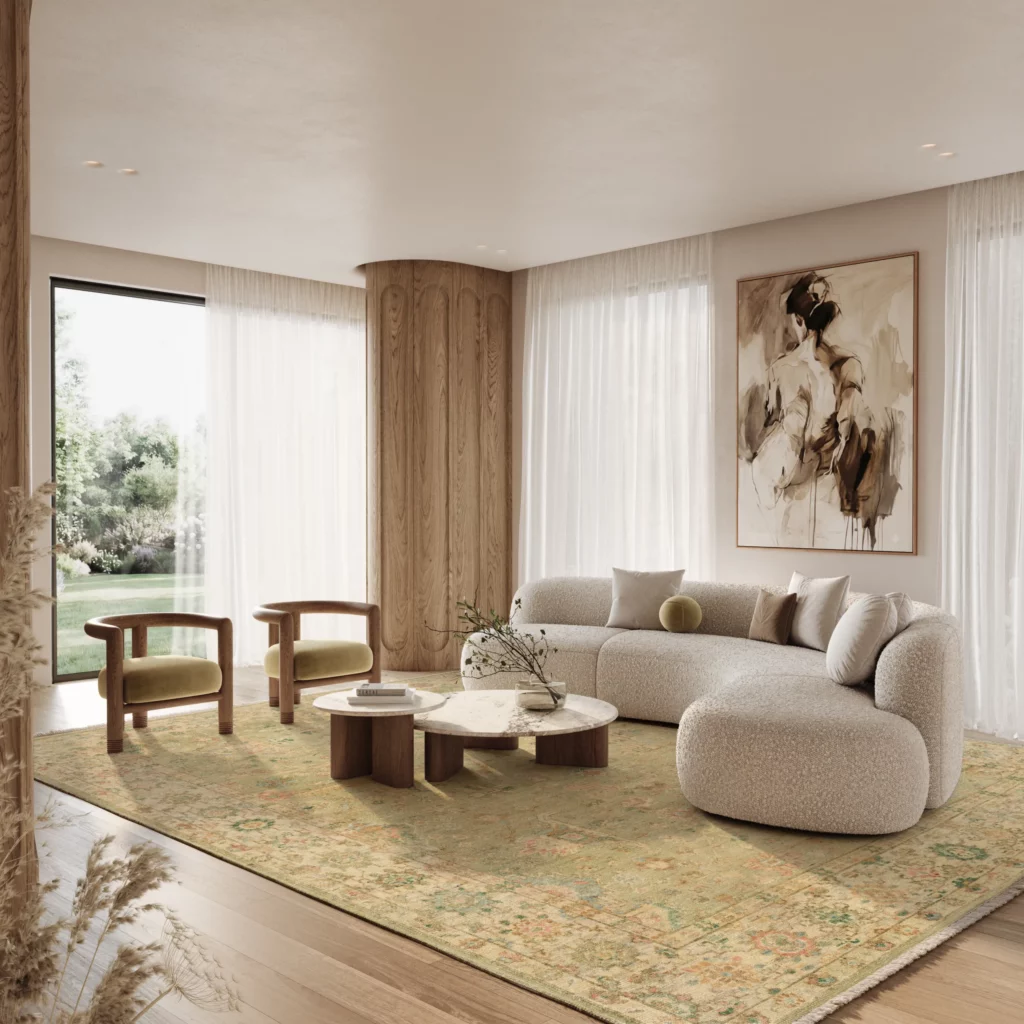
| Construction | Hand-knotted |
| Fiber | 89% wool, 7% cotton, 4% other |
| Origin | India |
| Pile height | 0.50 inch |
| Care | Vacuum without beater bar; prompt damp-cloth spot cleaning; professional cleaning recommended |
| Rooms | Living room, dining room, bedroom, or study; moderate foot traffic |
Odessa: heirloom-inspired pattern in premium wool
The Odessa Collection is hand-knotted in India from premium wool, with a 0.4-inch low loop pile. Its Oushak-inspired motifs and subtle space-dyed finish give each rug the softly faded character of an antique textile. We recommend this collection for moderate-traffic areas, particularly bedrooms, living rooms, and studies, where its traditional craftsmanship and natural wool texture can be enjoyed for years to come.
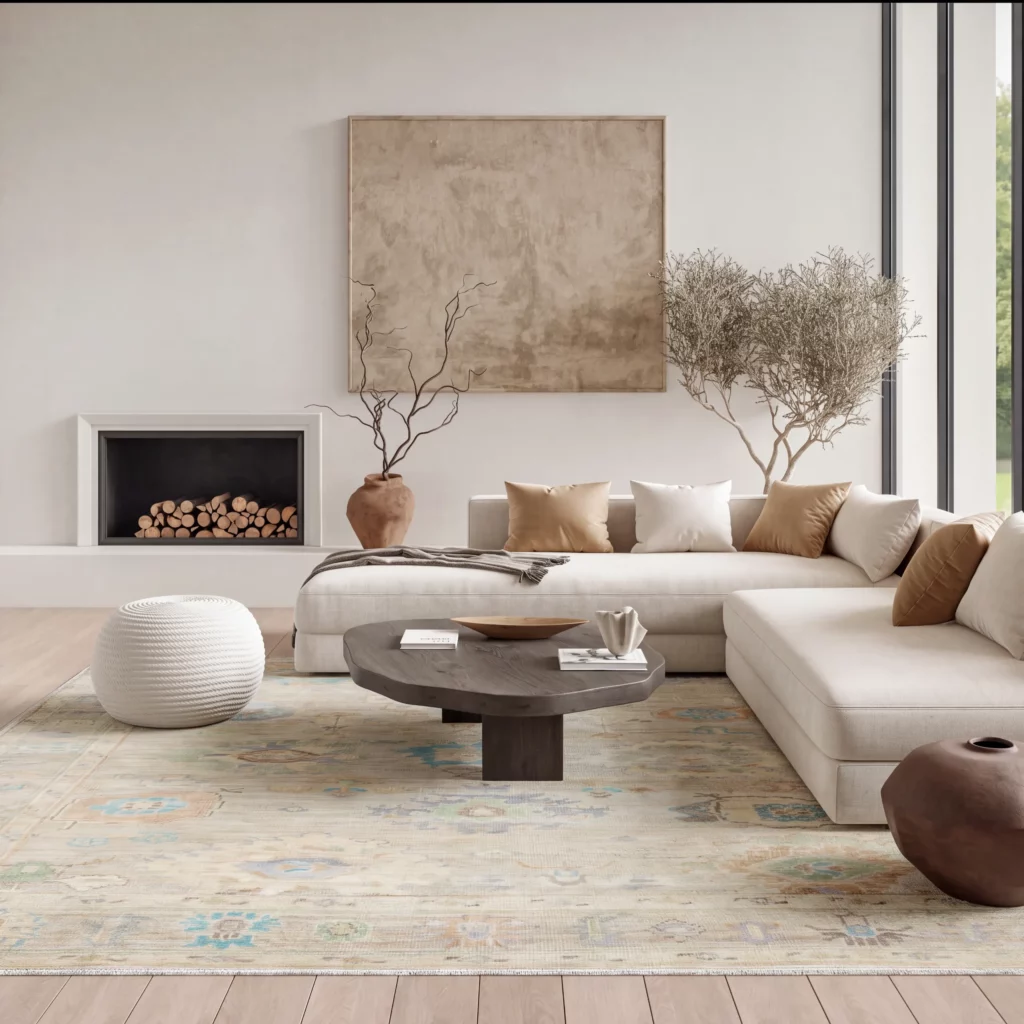
| Construction | Hand-knotted; Turkish knot listed |
| Fiber | Premium wool |
| Origin | India |
| Pile height | 0.4 inch |
| Care | Vacuum without beater bar; prompt damp-cloth spot cleaning; professional cleaning recommended |
| Rooms | Bedroom, study, or living room; moderate foot traffic |
How do you care for a rug so it lasts decades?
Good rug care is preventive. Dirt trapped at the base of a pile acts like an abrasive, while an unstable rug can crease, stretch, or wear unevenly. Start with the care label for your exact style and use the following habits as a baseline.
- Vacuum regularly using suction without a beater bar, especially on wool and fringed rugs. Increase frequency where grit accumulates.
- Rotate the rug roughly every six to 12 months as a practical starting point, or sooner if sunlight and traffic fall unevenly.
- Use a suitable rug pad sized for the rug and floor surface. Check that the pad is compatible with the flooring finish.
- Blot spills immediately with a clean cloth. Avoid aggressive scrubbing and untested cleaning chemicals.
- Arrange professional cleaning when soiling warrants it, often around every one to three years in ordinary residential use; traffic, pets, and the fiber may require a different interval.
For wool and silk, do not assume a home carpet extractor or steam cleaner is safe. A qualified rug cleaner should assess dye stability, construction, and any existing damage. Storage also matters: clean and dry a rug thoroughly before rolling it for a long period, and avoid damp spaces.
Where should a buy-it-for-life rug go, and where should it not?
The right placement protects your investment. Hand-knotted wool is well suited to living rooms and bedrooms where you want long service and the possibility of repair. In dining rooms, check chair clearance and choose a pile that allows seats to move without catching. Silk-accented pieces benefit from areas with controlled spills and gentler traffic.
Entryways, kitchens, and busy hallways collect grit and moisture, and even a quality wool rug will wear faster there. A lower-profile, easy-care performance rug may be the more sensible purchase for these locations. That does not make it an heirloom; it makes it appropriate for the job. Use the room and traffic level to decide the fiber, then evaluate the construction within that category.
A custom-sized rug can also prevent a costly mistake. Correct proportions keep walking routes clear and furniture stable, while reducing awkward folds or exposed edges. For help matching the surface to the room, see The Best Rug Pile for Each Room.
Is a long-lasting rug worth it? New versus secondhand and cost per year
A secondhand hand-knotted wool rug can be an excellent buy. Older rugs may have already demonstrated decades of structural strength, and professional restoration can make them usable again. Inspect for moth damage, dry rot, severe pile loss, color bleeding, and previous repairs. Factor cleaning and restoration into the price before comparing it with a new rug.
For new rugs, calculate cost per year of use rather than looking only at the price tag. These are illustrative numbers, not predictions or current Nourison Home prices: a $2,400 hand-knotted wool rug kept for 30 years costs $80 per year. A $400 rug replaced every five years costs the same $80 per year over 30 years, before disposal, delivery, cleaning, or resale value. If the wool rug lasts 40 years, its purchase cost falls to $60 per year. If it is badly placed or neglected, the math changes.
This is why buying quality rugs is a question of both budget and commitment. You are paying for the material and construction you can inspect today, plus the possibility of maintaining and repairing the rug tomorrow. If you plan to redecorate frequently or need a washable solution for a wet area, a different type of rug may serve you better.
To compare construction techniques before buying, read Are Hand-Knotted Rugs Worth It? and Are Handmade Rugs Worth It?. If you are still narrowing down your options, our guide to the best places to buy rugs covers shopping considerations, and How to Use AI to Buy a New Rug offers another way to research your choices.
Frequently asked questions
Q: What type of rug lasts the longest?
A: A well-constructed, hand-knotted wool rug is among the strongest candidates for multi-decade use because its pile is tied into a repairable foundation. Placement, fiber quality, and maintenance still determine the outcome.Q: Are hand-knotted rugs worth the money?
A: They can be when you plan to keep the rug for many years and value repairability. Compare construction details and cost per year of use, rather than assuming every hand-knotted rug is equally good.Q: How long should a wool rug last?
A: A quality wool rug can last for decades, but there is no guaranteed lifespan. Traffic, cleaning, sunlight, foundation condition, and construction are more informative than a blanket number.Q: Why is my wool rug shedding?
A: Loose fibers left from manufacture may shed with early use, and gentle vacuuming can reduce the buildup. Persistent or worsening shedding accompanied by visible thinning should be assessed by a rug professional.Q: How can you tell good wool quality in a rug?
A: Ask about fiber origin, composition, spinning, processing, construction, and care instructions. Inspect the rug in person where possible, and verify any certification against the exact product.Q: Is it better to buy a new or used wool rug?
A: Both can be worthwhile. A used hand-knotted rug may offer exceptional value if its foundation and pile are sound, while a new rug offers known specifications and a fresh starting condition.