What’s the Best Material for an Outdoor Rug? A Complete Expert Guide
The best material for an outdoor rug is solution-dyed polypropylene. It resists UV fading, repels moisture, dries quickly after rain, and holds up in high-traffic areas with minimal maintenance. PET (recycled polyester) is a close second, offering similar performance with a meaningful environmental advantage.
Both are performance fibers (synthetic materials engineered specifically for durability and outdoor conditions) and both outperform natural fibers outdoors by a significant margin.
That’s the short answer. Here’s everything else you need to know before you buy.
In This Guide:
- Why Outdoor Rug Material Matters More Than You Think
- Polypropylene: The Gold Standard for Outdoor Rugs
- PET (Recycled Polyester): Performance with a Sustainability Story
- Polypropylene vs. PET: How to Choose
- Nylon: Durable, But Not the Best Fit for Full Sun
- Natural Fibers Outdoors: Know the Limits
- What the Backing Does (and Why It Matters as Much as the Fiber)
- How Surface Type Affects Your Material Choice
- How a Rug Is Made Affects How It Wears
- How to Care for an Outdoor Rug
- How to Choose the Right Outdoor Rug Material: A Quick Reference
- FAQ
Why Outdoor Rug Material Matters More Than You Think
A rug that spends any time outside faces conditions that would destroy a typical indoor rug within a season: direct sun, rain, humidity, tracked-in dirt, and repeated foot traffic with no break. The right material handles all of that without fading, warping, or growing mold underneath. The wrong one looks fine in the store and deteriorates by July.
With proper care, a well-chosen synthetic outdoor rug typically lasts five to seven years. In humid or subtropical climates where mold and mildew are more aggressive, that range can shorten if the rug isn’t allowed to dry properly between weather events. Material is the single most important factor in how an outdoor rug performs. Style and color can follow from there.
Polypropylene: The Gold Standard for Outdoor Rugs
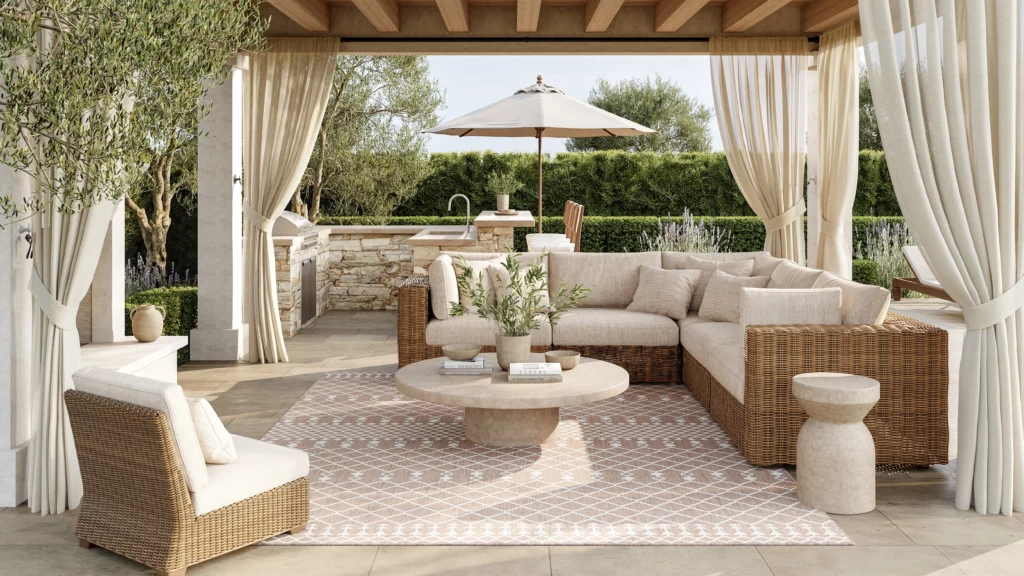
Polypropylene (also called olefin) is the most widely used performance fiber in outdoor rugs. The fibers are solution-dyed, meaning color is embedded into the fiber during extrusion rather than applied on top. That’s why polypropylene rugs resist fading even after extended UV exposure: the sun can’t strip out what’s already part of the fiber itself.
A few other things polypropylene does particularly well:
Moisture resistance: Polypropylene is inherently hydrophobic. Water beads off the fiber surface rather than penetrating it, which is why polypropylene rugs dry within a few hours of rain exposure under normal conditions. This matters most on open decks and pool surrounds where moisture is constant.
Durability: Dense, tightly woven polypropylene fibers bounce back after heavy foot traffic and resist crushing and matting over time. Polypropylene rugs hold their appearance in high-use areas including front entries, patios, and pool surrounds.
Stain resistance: Because the fibers don’t absorb liquid, most stains sit on the surface and can be removed with mild soap and water. Tougher spots generally respond to a diluted bleach solution without damaging the fiber.
Easy cleaning: Most polypropylene rugs can be rinsed with a garden hose and left to air dry. There’s no professional cleaning required.
The tradeoff: polypropylene can feel stiffer than softer synthetic fibers, though weave construction does a lot to compensate. A flatwoven polypropylene rug feels very different underfoot than a tufted one, so construction matters as much as fiber type when softness is a priority.
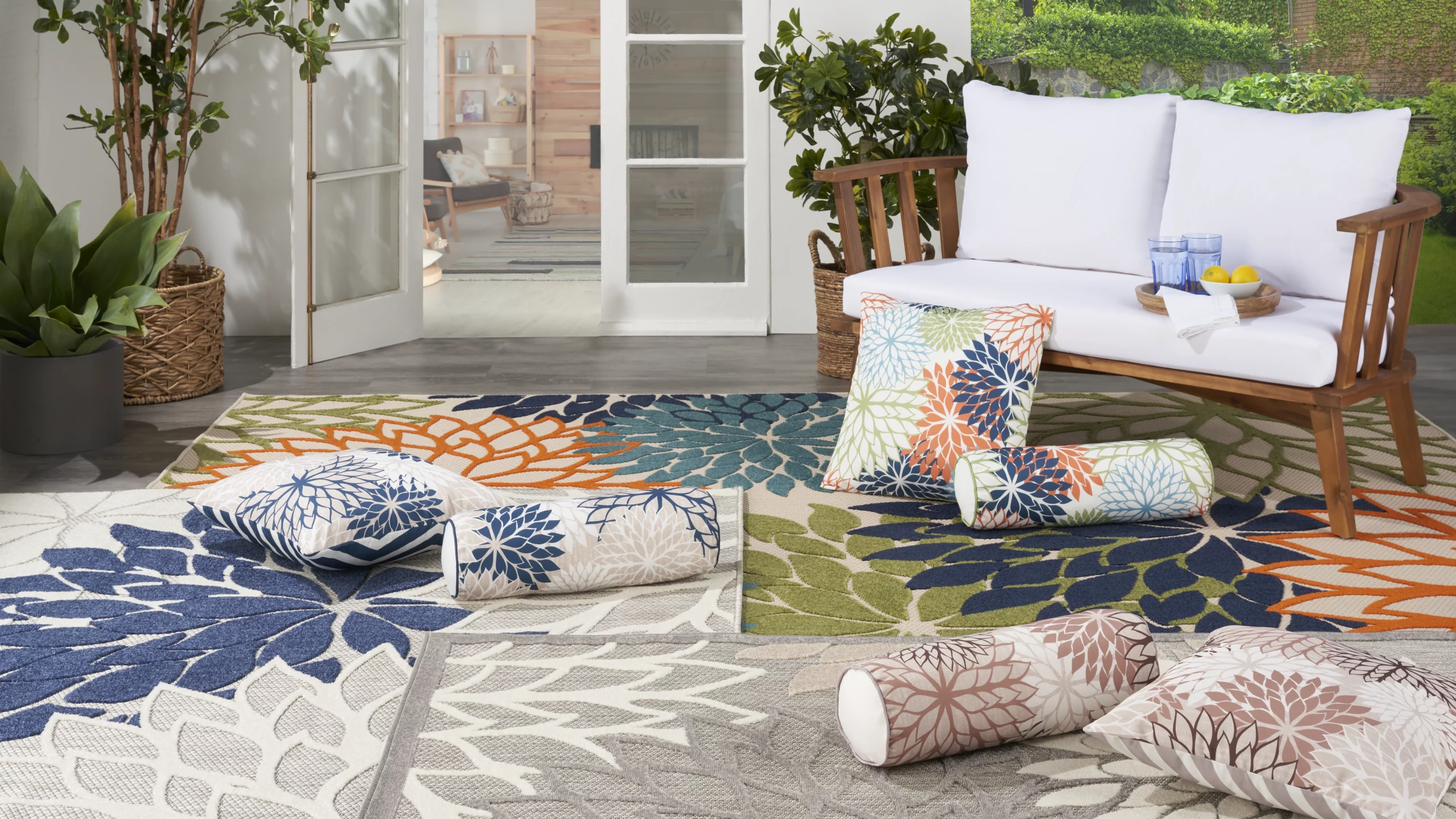
Our Aloha collection is a good example of what polypropylene can do outdoors. Power-loomed in bold, graphic patterns designed specifically for indoor/outdoor use, the construction holds up whether it lives on a shaded porch or a sun-exposed deck.
PET (Recycled Polyester): Performance with a Sustainability Story
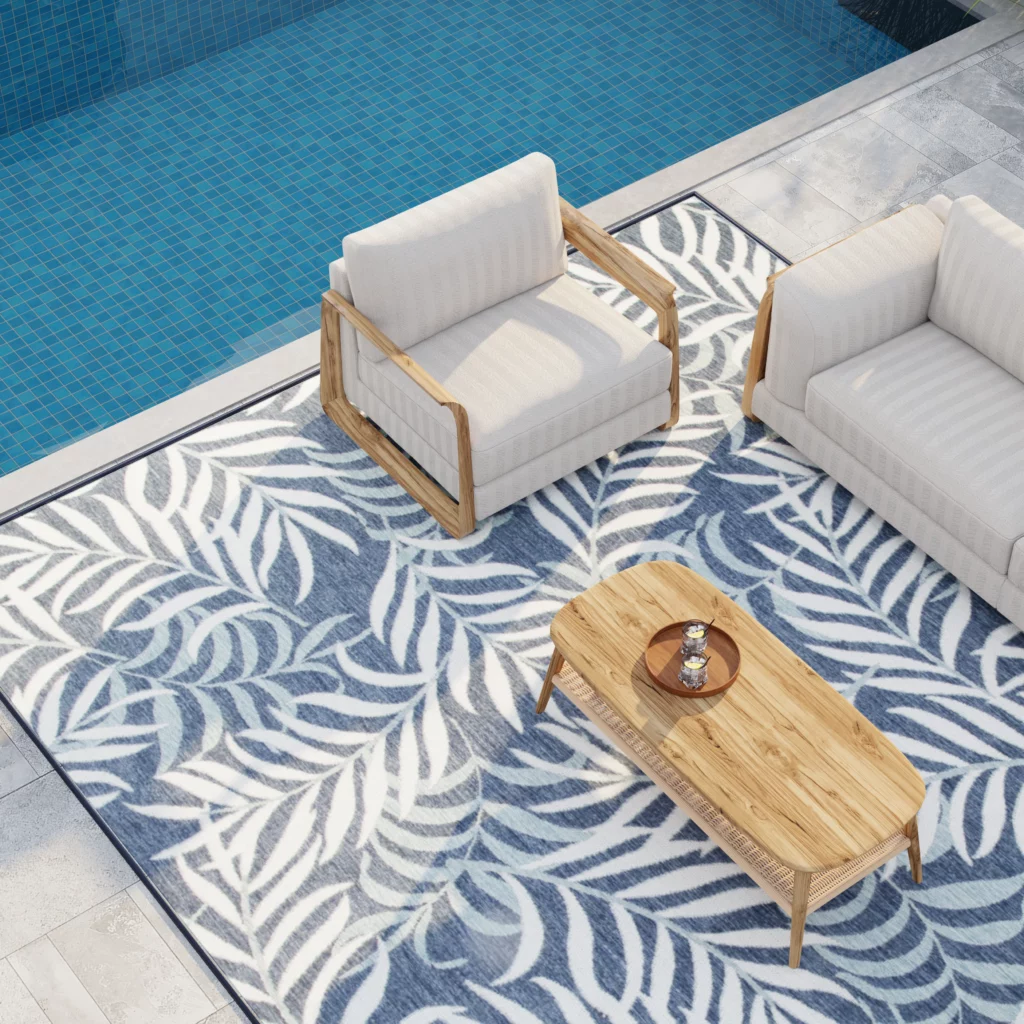
PET stands for polyethylene terephthalate, the same plastic used in water bottles and single-use packaging that would otherwise end up in a landfill. Rugs made from recycled PET take that material, break it down, and spin it into performance fiber.
Manufacturing recycled PET uses significantly less energy and water than producing virgin synthetic fiber, and every rug diverts a meaningful volume of plastic from the waste stream.
The fiber holds color well, offers solid UV resistance (particularly when UV stabilizers are incorporated during manufacturing), and tends to feel slightly softer underfoot than polypropylene. For families who want an outdoor rug that’s easier on both the floor and the planet, recycled PET makes a strong case.
Where PET differs from polypropylene: it absorbs a small amount of moisture due to its polar molecular structure. Not much, and it dries reasonably fast, but it’s worth keeping in mind for constantly wet environments like pool surrounds or climates with heavy rainfall. In most outdoor settings this is a non-issue.
Our Suncoast collection is built from recycled fibers and designed for full outdoor use. Coastal-inspired patterns, relaxed construction, the kind of rug that looks intentional on a deck without trying too hard.

Polypropylene vs. PET: How to Choose
Both are reliable performance fibers for outdoor use. The decision comes down to your specific priorities.
Choose polypropylene if the rug will live in full sun, near a pool, or in a climate with frequent rain. Its near-zero moisture absorption and stronger UV resistance make it the more durable choice in the most demanding conditions. It’s also the better option for high-traffic areas like busy patios or main entries.
Choose recycled PET if sustainability is a factor, if the space is partially covered, or if barefoot comfort is a priority. PET tends to offer a softer feel underfoot and a broader color range due to its molecular ability to bond with a wider palette of dyes.
For a covered porch or sunroom where the rug won’t face constant moisture, the performance gap between the two narrows considerably.
Both fiber types can be hosed down, air-dried, and cleaned with mild soap. Neither requires professional care.
Nylon: Durable, But Not the Best Fit for Full Sun
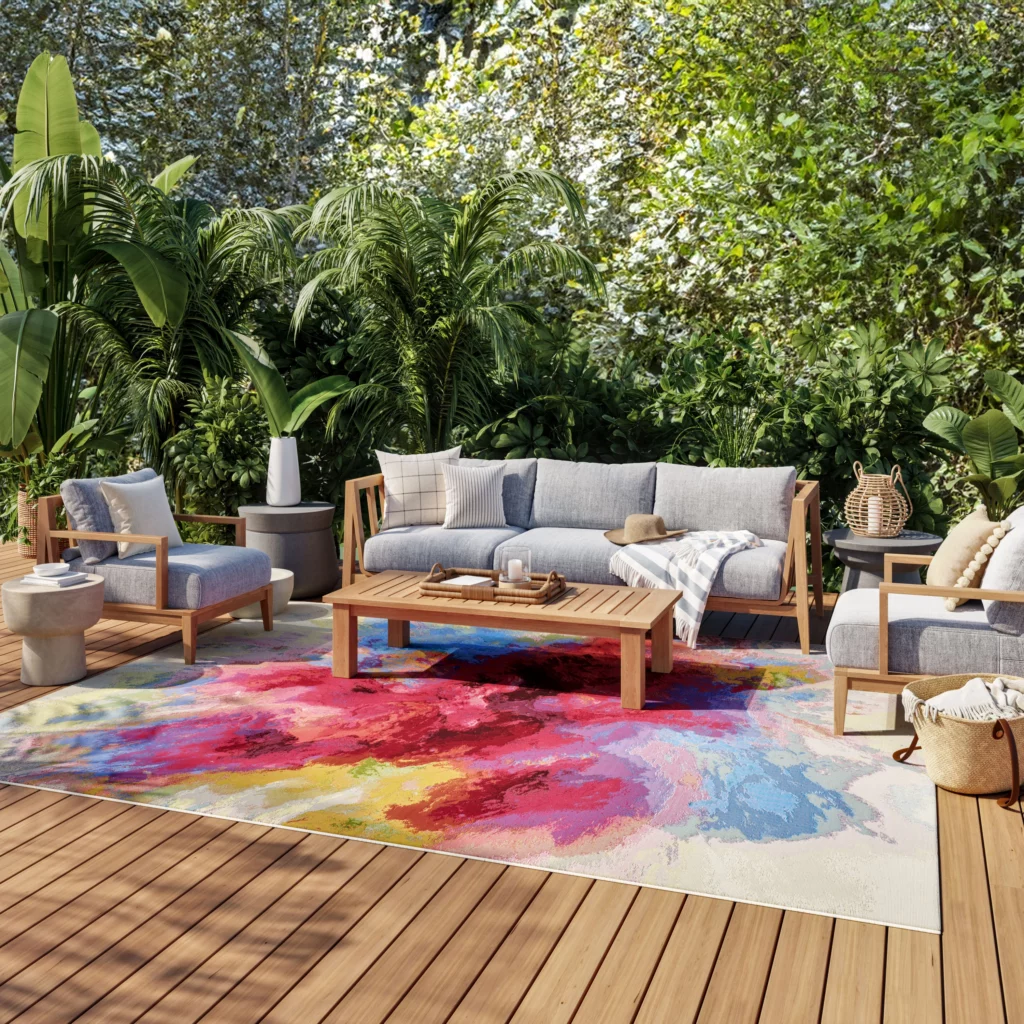
Nylon is one of the most abrasion-resistant synthetic fibers available, and it performs well in terms of wear. Where it falls short outdoors is UV stability. Nylon can fade with extended sun exposure more readily than polypropylene or PET, which makes it a better fit for covered outdoor spaces (a screened porch, a sunroom) than a fully exposed patio or deck.
If you find a nylon rug you love and the placement is shaded, it can work. For full-sun use, stick with polypropylene or PET.
Natural Fibers Outdoors: Know the Limits
Wool, jute, cotton, and sisal are beloved for what they bring indoors: organic texture, warmth, and a sense of quality underfoot. Outdoors, they have real limitations that are worth understanding before you buy.
Jute and sisal absorb moisture readily and break down with repeated exposure. Left outside in rain, they’ll mold, discolor, and deteriorate quickly. The open weave that makes them look breathable is not enough to overcome their hydrophilic fiber structure. These are not outdoor rugs, even if the style feels like it could work on a patio.
Wool is naturally durable, but it holds moisture without visibly showing it, creating the right conditions for mold and mildew in humid environments. Wool rugs belong indoors. For high-humidity areas especially, avoid placing wool outside even temporarily.
Cotton is the most flexible of the natural options and can tolerate an occasional splash, but it’s not built for sustained outdoor exposure. It’s more practical in a covered, low-humidity setting than on an open patio.
One important note: some rugs marketed as “natural fiber” or “sisal-style” are actually made from synthetic fibers woven to mimic the look. A synthetic sisal-style weave in polypropylene can be a legitimate outdoor option. Read the fiber content label, not just the product name.
If you love the look of natural fibers but need outdoor performance, a flatwoven performance fiber rug can get surprisingly close to a jute or sisal aesthetic without the moisture risk.

What the Backing Does (and Why It Matters as Much as the Fiber)
Most people focus on the face fiber and ignore the backing. That’s a mistake for outdoor rugs, particularly for deck and patio placement.
A rubber or latex backing traps moisture between the rug and the surface beneath it. On a wood-stained deck, that trapped moisture keeps the deck surface damp longer than the surrounding area, accelerating mildew growth and potentially affecting the deck’s stain or finish. On tile, trapped moisture can damage grout over time.
Look for rugs with a mesh, open-weave, or no backing construction that allows air to circulate and water to evaporate. For any outdoor surface, a rug pad rated for outdoor use is worth adding, it promotes airflow underneath the rug, reduces moisture buildup, and extends the rug’s lifespan.
How Surface Type Affects Your Material Choice
Where the rug lives affects how it performs, regardless of fiber type. Here’s what to factor in by surface:
Wood deck: Any rug, natural or synthetic, will trap some moisture against a wood deck surface after rain. Synthetic performance fibers dry faster and cause less prolonged dampness than natural fibers. Avoid rubber-backed rugs on stained wood; opt for open or mesh backing instead.
Concrete: Unless sealed, concrete is porous and can present challenges for moisture management. Choose a rug with a breathable backing that allows evaporation rather than trapping moisture between the rug and the slab.
Tile: Moisture trapped by a rug can affect tile grout over time, especially if the grout isn’t well sealed. Check grout condition before laying a rug on tile, and ensure the backing allows drainage.
Grass: A rug on grass is essentially sitting on a constantly wet surface. Even a breathable rug will eventually succumb to mold on its backing in this setting. If you need a rug on grass, consider installing click-lock tiles as a base layer first.
Balcony (steel or metal flooring): Metal surfaces in coastal or humid climates are prone to rust and corrosion. Click-lock tiles under the rug can serve as a practical barrier.
How a Rug Is Made Affects How It Wears
Fiber type is one variable. Construction is the other, and they interact.
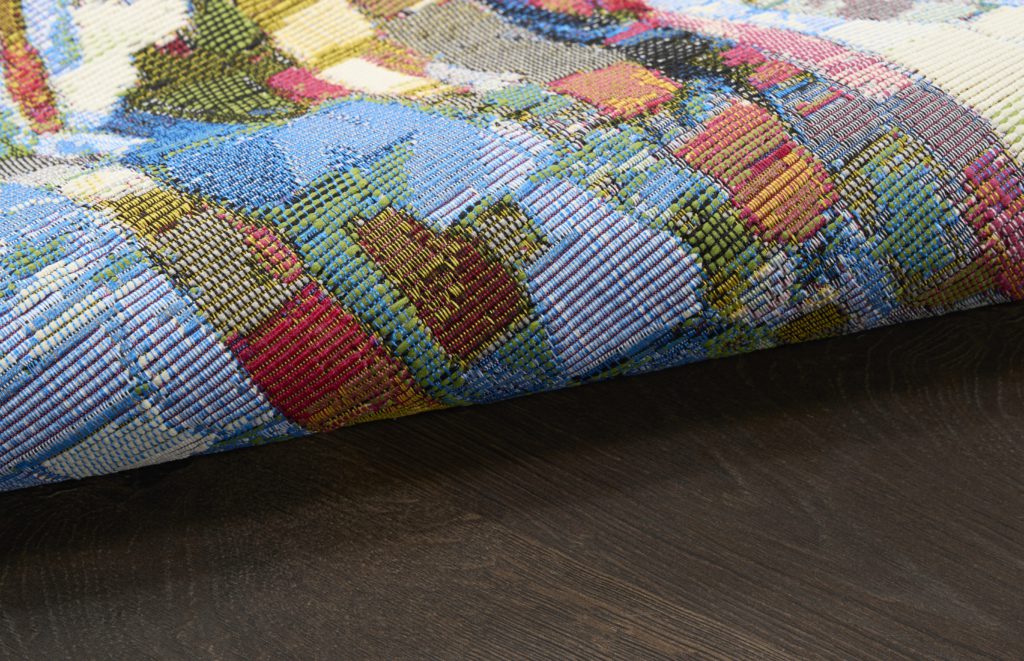
Power-loomed / flatwoven construction is the most practical for outdoor use. Low pile means faster drying, easier cleaning, and better resistance to trapping debris. Most high-performing outdoor rugs are flatwoven for exactly these reasons. Flatwoven polypropylene is the workhorse of the outdoor rug category.
Tufted construction with a low pile can work outdoors in partially covered settings. Higher pile traps more moisture and takes longer to dry, which increases mildew risk on open-air surfaces.
Braided or open-weave construction promotes airflow and drainage, which is an advantage in wet climates. The tradeoff is that open-weave styles can be harder to keep clean in high-traffic or high-dirtenvironments.
For homes with pets or children, avoid hooked or looped pile styles outdoors. These are more prone to snagging from claws and heavy use. Cut-pile or flatwoven construction holds up better.
How to Care for an Outdoor Rug
One of the biggest advantages of performance fiber outdoor rugs is how little they ask of you. Here’s the general approach:
Blot spills immediately rather than rubbing. Use a mild soap mixed with equal parts white vinegar and water for most cleaning. For polypropylene, a diluted bleach solution works on stubborn stains without damaging the fiber. Hose the rug down outside and hang it to dry completely before returning it to its spot. Never put it back while still damp underneath.
For routine maintenance, sweep or vacuum regularly to prevent dirt from working into the weave. At the end of the season, roll the rug and store it in a covered, dry space. A quick inspection at the start of each season is good practice regardless of material.
How to Choose the Right Outdoor Rug Material: A Quick Reference
Before you buy, work through these questions:
Is the space exposed to direct sun? Prioritize solution-dyed polypropylene or PET for UV resistance. Both are fade-resistant; polypropylene has a slight edge in full-sun conditions.
How wet does the space get? For pool surrounds, open decks, or high-rainfall climates, polypropylene’s near-zero moisture absorption gives it the advantage. PET is a solid choice for partially covered or lower-humidity settings.
Do you want easy cleaning? Both polypropylene and PET can be hosed down. Avoid natural fibers if low-maintenance care is a priority.
Is softness underfoot important? Recycled PET, or a tufted polypropylene construction, will feel softer than a flatwoven weave. For barefoot patios and deck spaces, this is worth prioritizing.
What’s the rug sitting on? Check the backing. Mesh or drainage-friendly backings are better for decks and tile than solid rubber, which traps moisture and can leave marks on the surface below.
What’s your priority: durability or sustainability? Polypropylene has a slight edge on raw durability in demanding conditions. Recycled PET makes essentially the same performance case with a stronger environmental story.
FAQ
Q: What is the best material for an outdoor rug? Solution-dyed polypropylene is the best all-around material for outdoor rugs. It resists UV fading, repels moisture, dries within a few hours of rain, and holds up in high-traffic areas with minimal maintenance. Recycled PET (polyester) is a strong alternative with a similar performance profile and a meaningful sustainability advantage.
Q: What is the difference between polypropylene and polyester for outdoor rugs? Polypropylene is hydrophobic at the fiber level, meaning water beads off without penetrating. It has stronger inherent UV resistance and is the better choice for full-sun or constantly wet settings. Polyester absorbs a small amount of moisture and may require added UV stabilizers to match polypropylene’s fade resistance, but it offers a softer feel and a wider color range. Recycled PET is the most common form of polyester used in outdoor rugs today.
Q: Can I use a polypropylene rug on a deck? Yes. Polypropylene is one of the best materials for deck use because it resists fading, doesn’t absorb moisture, and can be rinsed clean with a hose. Look for a rug with a mesh or open backing rather than solid rubber to allow proper drainage and prevent moisture from getting trapped between the rug and the deck surface.
Q: Are outdoor rugs waterproof? Most outdoor rugs are water-resistant, not fully waterproof. Polypropylene repels water and dries quickly, but it is not impermeable. The distinction matters most in climates with prolonged rain or for rugs placed near a pool or water feature. Water-resistant rugs perform well in most outdoor conditions; “waterproof” as a label generally refers to how quickly the rug releases moisture rather than whether water can penetrate it at all.
Q: How long do outdoor rugs last? With proper care, synthetic outdoor rugs typically last five to seven years. Climate plays a significant role: in humid or subtropical environments, mold and mildew can reduce lifespan if the rug isn’t allowed to dry properly. Bringing the rug in at the end of the season and storing it in a dry, covered space extends its life meaningfully.
Q: Can outdoor rugs be left outside year-round? In temperate climates with mild winters, polypropylene and PET outdoor rugs can stay outside year-round. In climates with harsh winters or extended heavy moisture, rolling the rug and storing it indoors or in a covered space during the off-season extends its lifespan. A quick inspection at the start of each season is good practice regardless of material.
Q: What should I avoid in an outdoor rug? Avoid natural fibers like jute, sisal, and untreated cotton for any space that sees regular rain or humidity — they absorb moisture, mold, and break down faster than performance fibers. Also avoid rubber or latex-backed rugs on wood decks or tile surfaces, where trapped moisture can cause mildew or surface damage. If the rug will live in full sun, avoid fibers without UV stabilization.
Browse Nourison’s full range of outdoor rugs, including the Aloha, Suncoast, Color Splash, Courtyard, Easy Care and Positano collections, to find a style built for where you actually live.